






TL;DR – Core Web Vitals measure a website’s loading performance, responsiveness, and visual stability. Aim for an LCP of 2.5 seconds or less, an INP of 200 milliseconds or less, and a CLS score of 0.1 or less at the 75th percentile. This guide explains how to measure these metrics, diagnose performance issues, and apply targeted fixes that support a better user experience.
If Google Search Console reports poor Core Web Vitals for your website, the first step is to identify which performance metric is causing the problem. A page may load slowly, respond late when someone clicks a button, or shift unexpectedly while its content appears.
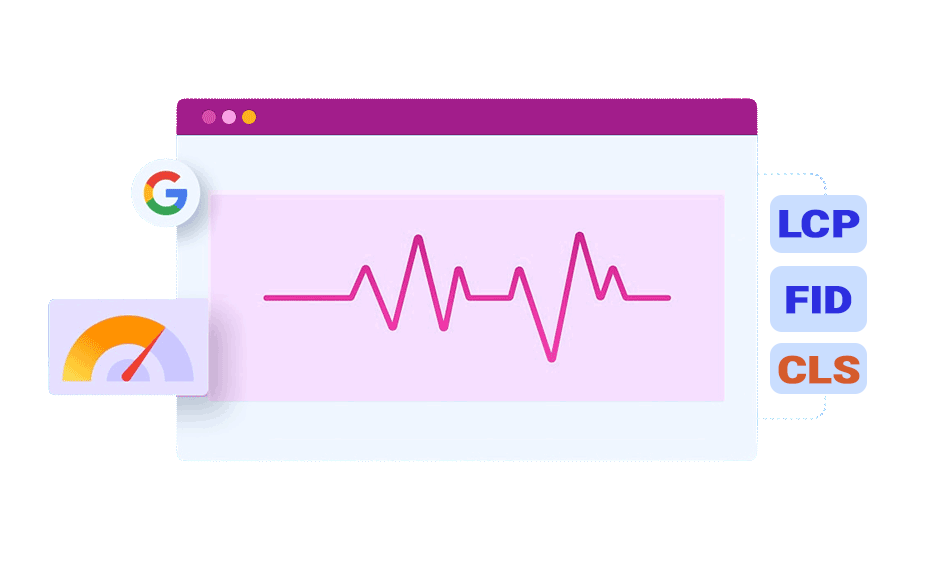
Google measures these experiences through three Core Web Vitals: Largest Contentful Paint (LCP), Interaction to Next Paint (INP), and Cumulative Layout Shift (CLS). Each metric measures a different aspect of page performance, and each requires a different approach to improvement.
This guide explains the recommended Core Web Vitals thresholds for 2026, how to diagnose common performance issues, and which optimization techniques can help your website deliver a better user experience.
Core Web Vitals in 2026: What You Need to Know
Core Web Vitals are three Google performance metrics that measure loading performance, responsiveness, and visual stability. To provide a good user experience, aim for an LCP of 2.5 seconds or less, an INP of 200 milliseconds or less, and a CLS score of 0.1 or less.
| Metric | What it measures | Good threshold | Common starting point for improvement |
|---|---|---|---|
| Largest Contentful Paint (LCP) | How quickly the main content appears | 2.5 seconds or less | Optimize the main image, server response, and critical resources |
| Interaction to Next Paint (INP) | How quickly the page responds to user interactions | 200 milliseconds or less | Identify long JavaScript tasks and reduce unnecessary processing |
| Cumulative Layout Shift (CLS) | How much the page layout shifts unexpectedly | 0.1 or less | Set image dimensions and reserve space for dynamic content |
Google evaluates these metrics at the 75th percentile of page visits, with mobile and desktop assessed separately. A good result means that at least 75% of measured visits meet the recommended threshold for the metric.
What are Core Web Vitals and How to improve them?
Core Web Vitals help website owners understand whether visitors can view content quickly, interact with a page without frustrating delays, and browse without unexpected layout changes. Here’s what each metric measures and how you can improve it.
1. Largest Contentful Paint (LCP): Measuring Loading Performance
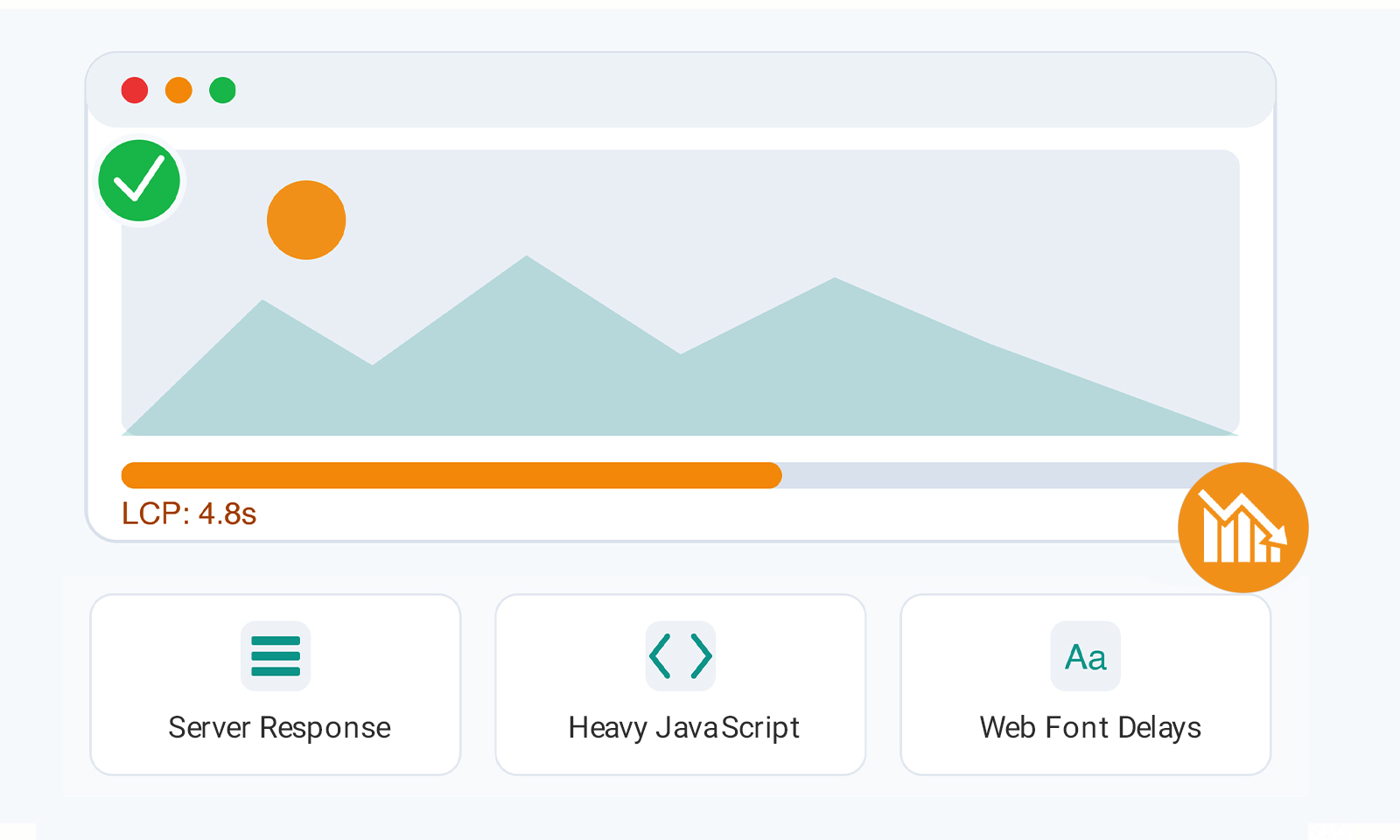
Largest Contentful Paint (LCP) measures how long it takes for the largest visible image or text block in the viewport to render. It often represents the main content that visitors want to see when a page opens.
A good LCP is 2.5 seconds or less. If the main product image, hero image, or heading takes too long to appear, visitors may perceive the page as slow even if other elements load quickly.
How to improve LCP:
- Improve server response time: Review hosting performance, caching, redirects, and backend processing if the initial HTML takes too long to arrive.
- Optimize the main image: Compress images, use suitable formats such as WebP or AVIF where supported, and serve appropriately sized files.
- Prioritize the LCP resource: Make sure the main image can be discovered early. Avoid lazy-loading an image that is likely to be the LCP element.
- Reduce render-blocking resources: Review CSS and JavaScript that delay the browser from displaying the main content.
- Use a CDN where appropriate: A content delivery network can help deliver resources efficiently to visitors in different locations.
Use PageSpeed Insights to identify the LCP element and examine whether the delay comes from server response, resource discovery, downloading, or rendering.
2. Interaction to Next Paint (INP): Measuring Responsiveness
Interaction to Next Paint (INP) measures how responsive a page is to user interactions, including clicks, taps, and keyboard input. It considers the time spent processing an interaction and the time until the next visual update.
A good INP is 200 milliseconds or less. When a page takes too long to respond, visitors may struggle to open menus, apply product filters, submit forms, or add products to their carts.
INP replaced First Input Delay (FID) as a Core Web Vital in March 2024. Unlike FID, which measured only the delay before the browser began processing the first interaction, INP provides a broader view of responsiveness throughout a visit.
How to improve INP:
- Reduce unnecessary JavaScript work: Identify scripts that perform expensive calculations or updates during user interactions.
- Break up long tasks: Split lengthy tasks into smaller pieces so the browser has more opportunities to respond to user input.
- Review third-party scripts: Check whether analytics tools, chat widgets, advertising scripts, or other integrations interfere with interactions.
- Simplify event handlers: Avoid unnecessary processing when users click buttons, open menus, or change product options.
- Investigate rendering delays: Reduce unnecessary DOM updates and expensive layout or rendering work after interactions.
Use Chrome DevTools Performance to investigate slow interactions and identify long tasks. For real-user INP data, consult PageSpeed Insights or the Core Web Vitals report in Google Search Console.
3. Cumulative Layout Shift (CLS): Measuring Visual Stability
Cumulative Layout Shift (CLS) measures unexpected movement of visible page elements. For example, a visitor might begin reading a product description when a late-loading banner pushes the text down the page.
A good CLS score is 0.1 or less. Unlike LCP and INP, CLS is a unitless score, not a measurement in seconds.
Unexpected layout shifts can make a website difficult to use and may cause visitors to click the wrong button or lose their place while reading.
How to reduce CLS:
- Set image and video dimensions: Reserve the correct space for media before it loads.
- Reserve space for ads and embeds: Avoid allowing late-loading elements to push existing content around.
- Manage font loading: Use appropriate fallback fonts and font-loading strategies to reduce unexpected text movement.
- Avoid inserting content above existing content: If a banner or announcement appears dynamically, make sure it does not unexpectedly shift the page.
- Investigate changing page elements: Use browser performance tools to identify the elements responsible for layout shifts.
For a detailed investigation, compare the affected page’s behaviour during loading and after interaction. Lab tools can help identify initial-load shifts, while real-user monitoring can reveal problems that happen later in a visit.
How to Diagnose and Fix Core Web Vitals Issues
Before making changes, identify the metric that needs improvement and the cause of the problem. Applying every available optimization technique may waste time or introduce new issues.
Use this troubleshooting table to decide where to start.
| Problem | What to investigate first |
|---|---|
| Main content appears slowly | LCP element, server response time, image priority, critical CSS |
| Buttons or menus respond slowly | Long JavaScript tasks, event handlers, third-party scripts |
| Content jumps while loading | Image dimensions, font loading, advertisements, dynamic content |
| Lab results are good but field data is poor | Mobile performance, network conditions, user interactions, page templates |
| Some pages fail while others pass | Shared templates, page-specific resources, product or content differences |
Once you identify the likely cause, apply a targeted fix and test the same page again. Check whether the intended metric improved and whether the change affected other aspects of the user experience.
When lab results and field data disagree, check whether they represent the same URL, device type, and performance period. Field data reflects real visits over time, while a lab test captures a particular test run under controlled conditions. If the field report groups several URLs together, investigate the affected page templates and test representative URLs before applying a site-wide change.
1. Improve Loading Performance
Start with the main content and resources that prevent it from appearing quickly. Optimize large images, reduce unnecessary redirects, review server response time, and avoid delaying the discovery of the LCP resource.
Do not automatically lazy-load every image or preload every resource. Prioritize resources based on their role in the initial viewport and verify the effect through testing.
2. Improve Responsiveness
Focus on the interactions that matter to visitors, such as navigation, product selection, filtering, and form submission. Use browser performance traces to find expensive JavaScript work and review whether third-party integrations are necessary.
Removing a script may improve responsiveness, but it can also affect site functionality. Test changes before deploying them across the entire website.
3. Reduce Unexpected Layout Shifts
Check whether images, fonts, banners, embedded content, or dynamically inserted components cause elements to move. Reserve space for content that loads later and avoid inserting new elements above content that visitors are already using.
Retest the page after making changes. Some layout shifts happen only after a user interacts with the page, so a single page-load test may not reveal every issue.
4. Use Performance Optimization Techniques Carefully
Techniques such as caching, image compression, script deferral, minification, and resource prioritization can help improve website performance. Their effectiveness depends on the underlying problem and how the website is built.
For example, minifying JavaScript does not necessarily resolve a slow interaction if the main problem is expensive JavaScript execution. Similarly, a CDN may help with resource delivery but will not automatically fix a layout shift caused by a dynamically inserted banner.
Website owners who want to reduce repetitive performance work can also explore Website Speedy, which automates supported website speed optimizations. The appropriate solution depends on the website platform and the performance issues identified during testing.
5. Monitor Performance After Making Changes
Performance can change when you add apps, publish new content, update a theme, or introduce third-party scripts. Check important page templates periodically and investigate any new problems.
Use Google Search Console to review field performance across groups of URLs, and use PageSpeed Insights or Chrome DevTools to investigate individual pages. Keep a record of the changes you make so you can identify which optimizations help and which need further review.
How Do Core Web Vitals Affect SEO?
Core Web Vitals are part of Google’s broader approach to evaluating page experience. They measure loading performance, responsiveness, and visual stability, helping website owners identify issues that can make pages frustrating to use.
Search rankings:
Core Web Vitals are among the signals Google considers when evaluating page experience, but meeting the recommended thresholds does not guarantee higher rankings. Google also considers content relevance, quality, and how well a page meets users’ needs. Core Web Vitals should therefore complement, not replace, useful content and sound technical SEO.
User experience:
Pages that load quickly, respond promptly to clicks and taps, and avoid unexpected layout shifts are generally easier to use. Improving page loading performance can help visitors access information sooner, navigate product pages, interact with forms, and complete tasks with fewer interruptions.
Business outcomes:
Performance problems can create friction during important user journeys. For example, a slow product page may delay access to product details, an unresponsive filter can make browsing difficult, and a shifting checkout button can disrupt a purchase. Improving LCP, INP, and CLS can address these usability problems, although better Core Web Vitals scores alone do not guarantee higher conversions or revenue.
For SEO, use Core Web Vitals alongside content quality, crawlability, internal linking, and other technical SEO checks. Treat performance as one part of building a useful, accessible website rather than relying on performance scores as a standalone ranking strategy.
Best Tools to Measure Core Web Vitals
Different tools serve different purposes. Some show how real visitors experience your website, while others help you investigate specific performance problems.
| Tool | What it helps you do |
|---|---|
| Google Search Console | Identify groups of URLs with poor, needs-improvement, or good field performance |
| PageSpeed Insights | Review available real-user field data and lab diagnostics for a URL |
| Chrome DevTools Performance | Investigate long tasks, rendering delays, interactions, and layout shifts |
| Lighthouse | Run lab audits and identify potential performance improvements |
| Chrome UX Report (CrUX) | Explore aggregated real-user performance data where available |
Field data and lab data are not the same. Field data reflects real visitors’ experiences, while lab data comes from a controlled test environment. Field data helps you understand actual performance, and lab tools help you investigate the causes of problems.
A page can have a strong Lighthouse score while still experiencing poor Core Web Vitals in the field. This can happen because of differences in devices, networks, page content, and user interactions. Use both types of data to understand the problem and verify your fixes.
How to Monitor Core Web Vitals Over Time
Improving Core Web Vitals is an ongoing process. A page that performs well today may develop problems after a theme update, a new app installation, or a change to its images and scripts.
To maintain good performance:
- Review important URLs regularly. Prioritize high-traffic pages, product pages, landing pages, and other templates that support important user journeys.
- Check Search Console reports. Look for URL groups that move into the poor or needs-improvement categories.
- Retest after major changes. Use PageSpeed Insights and browser tools to investigate new performance issues.
- Keep a record of fixes. Document the original problem, the change made, and the test results.
- Check real-user results. Use field data to understand whether improvements are reflected in visitors’ experiences.
Monitoring performance over time also helps you understand whether optimizations continue to work as your website changes. For example, a Website Speedy customer, Addy Ochaga, reported PageSpeed scores of around 95–96 on mobile and 99 on desktop after manual optimization. The reviewer also noted that performance remained strong after additional website updates.
This is one customer’s reported experience, not a guaranteed result for every website. PageSpeed scores can fluctuate and do not, by themselves, confirm that a site meets Google’s Core Web Vitals thresholds. Track LCP, INP, and CLS separately in PageSpeed Insights and Google Search Console to assess your website’s performance.
Website Speedy can help automate supported performance optimizations, but monitoring results and investigating unresolved issues remain important. No single tool can guarantee that every page will consistently meet all Core Web Vitals thresholds.
Conclusion
Core Web Vitals help website owners understand how quickly content loads, how smoothly pages respond to interactions, and whether layouts remain stable. To provide a good user experience, aim for an LCP of 2.5 seconds or less, an INP of 200 milliseconds or less, and a CLS score of 0.1 or less.
Start by checking your website’s field data, identifying the causes of poor performance, and applying targeted fixes. Use lab tools to investigate problems and real-user data to evaluate the experience visitors actually receive.
Consistent testing, careful optimization, and regular monitoring can help you maintain a faster, more responsive website while supporting your broader SEO efforts.
Frequently Asked Questions
1. What are the three Core Web Vitals in 2026?
The three Core Web Vitals are Largest Contentful Paint (LCP), Interaction to Next Paint (INP), and Cumulative Layout Shift (CLS). They measure loading performance, responsiveness, and visual stability, respectively.
2. What is a good Core Web Vitals score?
A good result means an LCP of 2.5 seconds or less, an INP of 200 milliseconds or less, and a CLS score of 0.1 or less. Google evaluates these thresholds at the 75th percentile of page visits, separately for mobile and desktop.
3. Can a website rank well if its Core Web Vitals are poor?
Yes. Poor Core Web Vitals do not automatically prevent a page from ranking in Google Search. Performance is one aspect of page experience, while relevance, content quality, and other ranking factors also matter.
4. Why does my website pass PageSpeed Insights but fail Core Web Vitals in Search Console?
PageSpeed Insights can show both lab results and available real-user field data, while Search Console reports on field performance across groups of URLs. Differences in devices, networks, page templates, and reporting periods can explain why results differ.
5. How long does it take for Core Web Vitals improvements to appear in Search Console?
There is no fixed timeline. Lab results can reflect changes as soon as you retest a page, but field assessments depend on real-user data and the reporting period. Continue checking the relevant reports rather than assuming a change will appear within a set number of days.
6. Can apps and third-party scripts affect Core Web Vitals?
Yes. Apps, analytics scripts, chat widgets, and other third-party resources can delay rendering, slow interactions, or cause layout shifts, depending on how they load and execute. Identify their actual impact before removing or changing them.
7. Which tools should I use to measure Core Web Vitals?
Use Google Search Console to identify affected URL groups, PageSpeed Insights to review field data and lab diagnostics, and Chrome DevTools to investigate specific issues. Lighthouse can also help identify potential improvements in a controlled test environment.
8. Does improving Core Web Vitals guarantee better SEO rankings?
No. Improving Core Web Vitals can contribute to a better page experience, but it does not guarantee higher rankings. Website owners should also focus on useful content, technical SEO, crawlability, and meeting visitors' needs.
About the Author