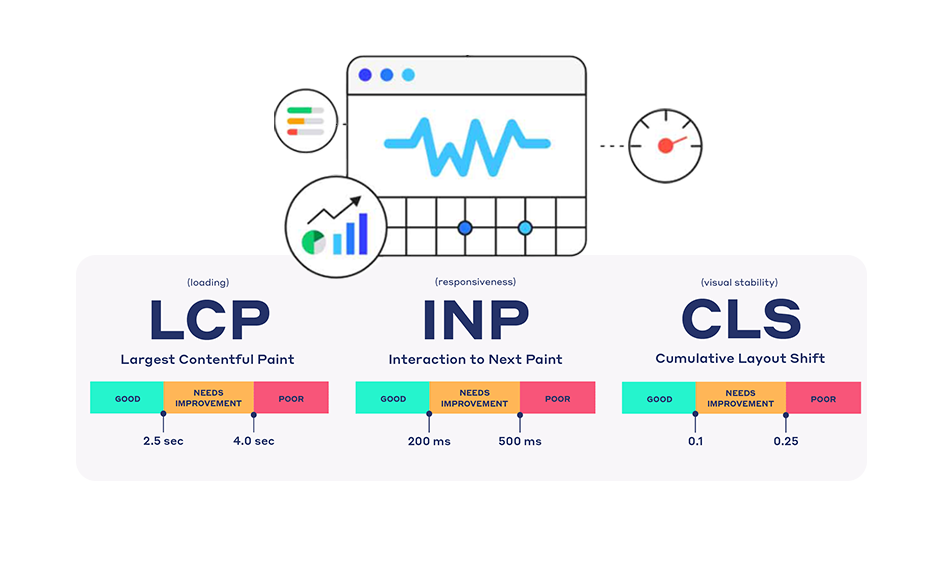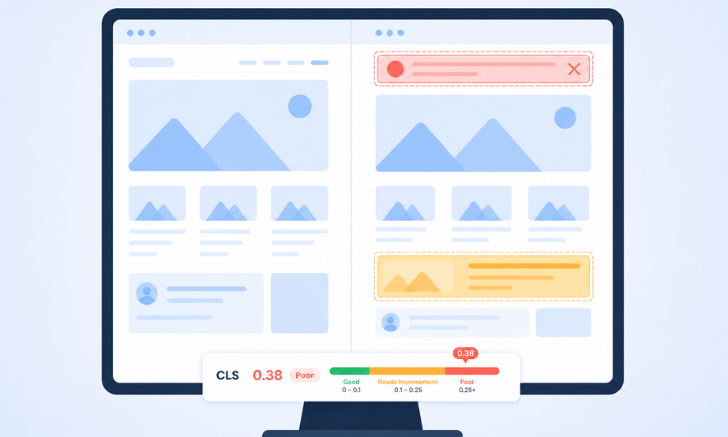







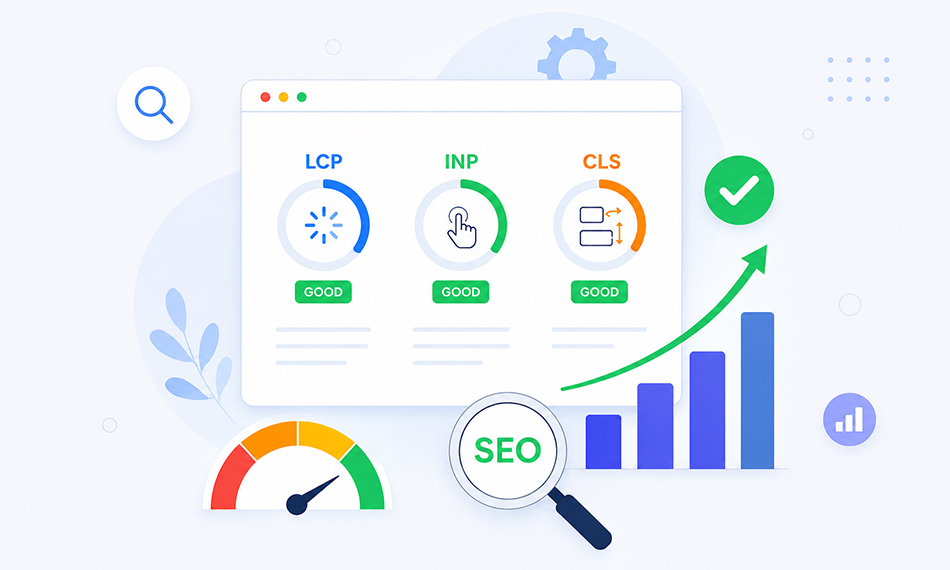
TL;DR: Core Web Vitals matter for SEO, but they’re not stronger than content quality, search intent, or authority. They work best as supporting UX signals that can improve rankings, engagement, and conversions, not as standalone ranking boosters.
The debate around Core Web Vitals and SEO has grown rapidly over the last few years. Since Google introduced Core Web Vitals as part of its Page Experience signals, businesses and SEO agencies have heavily focused on improving performance scores.
But real search results tell a more complicated story. Many slower websites still rank highly, while faster, optimized pages don’t always see major ranking improvements. This raises an important question: do Core Web Vitals matter for SEO as much as they’re often claimed to?
The answer is more balanced than many discussions suggest. Core Web Vitals are part of Google’s ranking systems, but they operate alongside much stronger signals like content relevance, authority, and search intent.
What Google Really Says About Core Web Vitals and Rankings
Google has confirmed that Core Web Vitals are a ranking factor, but not one strong enough to outweigh relevance or content quality. With the Page Experience update, Core Web Vitals became part of Google’s ranking systems, but they were never positioned as a dominant factor.
Instead, Google has consistently clarified that page experience is just one of many ranking signals. In most cases, relevance and content quality carry significantly more weight than website performance metrics alone. This means a highly relevant page can still rank well even if its Core Web Vitals are not perfect.
The key takeaway is simple: relevance outweighs page experience. Google prioritizes showing the most useful and relevant content for a query first, and then considers page experience as a supporting signal when multiple pages are similarly strong.
This is why Core Web Vitals should be seen as a contributing factor in SEO rather than a deciding one in isolation.
Why Many Slow Websites Still Rank at the Top
This is one of the biggest reality checks in the Core Web Vitals debate. If you look at competitive SERPs, you’ll notice many top-ranking websites are not fast or fully optimized.
According to the HTTP Archive report, 15% of websites still fail Core Web Vitals benchmarks despite maintaining strong search visibility and traffic performance.
Large publishers, eCommerce platforms, and forums often fail Core Web Vitals tests but still dominate rankings. Platforms like Reddit or major news sites may load slowly due to ads, scripts, and heavy media, yet they rank well because they excel in stronger SEO signals like:
- Authority and trust
- Strong backlink profiles
- Topical relevance
- Search intent satisfaction
- Brand recognition
Google doesn’t reward website speed alone, it rewards usefulness. If a slower page better satisfies intent, it can still outrank a faster one.
This is why many businesses improve their Lighthouse scores but see little change in rankings. They optimize a secondary signal while missing stronger factors like content depth and authority. Core Web Vitals only become impactful when pages are otherwise similar in quality.
Core Web Vitals vs Content Quality: Which Matters More in 2026?
If forced to choose, content quality wins almost every time. Search engines exist to solve user problems, so pages that best satisfy search intent, demonstrate expertise, and provide value will usually outrank faster but weaker content. This is why “Core Web Vitals vs content” is not really a fair comparison.
Both content quality and Core Web Vitals operate at different levels of SEO. Content quality sits higher in Google’s ranking priorities, while Core Web Vitals act as a supporting UX signal. A fast page with poor content rarely ranks well, while a slower, authoritative page can still perform strongly if it fully satisfies user intent.
Google has consistently reinforced this idea: page experience does not override relevance or helpful content.
When Core Web Vitals Truly Matter for SEO
Despite the overhype, there are absolutely situations where Core Web Vitals become genuinely important. This is where Core Web Vitals become especially important for SEO, user experience, and conversion-focused performance.
The impact is usually strongest in environments where user experience directly affects business outcomes.
E-commerce Websites
Slow ecommerce stores lose revenue quickly.
Even small delays can reduce conversions, increase cart abandonment, and frustrate mobile users. Faster experiences improve usability, which often improves engagement and sales performance alongside SEO visibility.
Mobile-Heavy Audiences
Mobile users are less patient than desktop users.
A sluggish mobile experience creates friction immediately. Since Google primarily evaluates pages through mobile-first indexing, poor mobile UX can become a larger issue in competitive industries.
Ad-Heavy Websites
Publishers overloaded with ads often create unstable and frustrating experiences.
Aggressive monetization can hurt usability enough that performance problems become difficult to ignore, both for users and search systems.
Conversion-Focused Landing Pages
For landing pages, page speed affects much more than rankings.
It influences:
- Conversion rates
- Bounce rates
- Session duration
- Engagement
- Lead generation
In these scenarios, improving Core Web Vitals can create measurable business improvements even if rankings barely change.
Competitive SERPs
Core Web Vitals matter most when content quality and authority are already comparable.
If two pages satisfy intent similarly, stronger page experience signals may help Google decide which page deserves slightly better visibility.
The Biggest Myth About Core Web Vitals and SEO
A common mistake is assuming Core Web Vitals directly cause major ranking improvements. Core Web Vitals affect rankings, but usually in supporting or competitive tie-break situations rather than dramatic ranking jumps.”
In reality, their impact is often indirect. Better performance improves user experience, which can lead to better engagement, conversions, and retention, all of which support SEO over time.
However, this is not the same as saying “better Core Web Vitals = higher rankings.”
Google has also cautioned against obsessing over perfect scores purely for SEO gains. Once performance reaches a “good enough” level, improvements often deliver diminishing returns.
That’s why many SEOs treat Core Web Vitals as a supporting or tie-breaker signal rather than a primary ranking driver.
Are Core Web Vitals Overhyped by SEO Agencies?
Sometimes, yes.
Core Web Vitals are easy to measure and visually impactful in audits, which makes them attractive for SEO pitches. A poor Lighthouse score creates urgency, even when the real SEO issue lies elsewhere.
This often leads businesses to overinvest in performance tuning while neglecting more impactful areas like content strategy, internal linking, or authority building.
That said, Core Web Vitals still matter for UX and should not be ignored. The issue is expectations: CWV improves SEO outcomes only when paired with strong content and strategy, not in isolation.
What Businesses Should Prioritize Before Core Web Vitals
One of the biggest SEO mistakes is prioritizing performance metrics before a foundational SEO strategy.
For most websites, the smarter priority order looks more like this:
A technically fast site with weak content architecture usually struggles long-term. Meanwhile, a slower but highly authoritative site can continue performing well because it satisfies users better overall.
Core Web Vitals should refine a strong SEO foundation, not compensate for missing one.
Do Core Web Vitals Matter for SEO or Are They Overhyped?
The honest answer is: partially.
Core Web Vitals are not useless. They are legitimate ranking considerations and valuable UX metrics. Google clearly uses them within broader page experience evaluations.
But they are also frequently overstated as ranking game-changers. The reality sits somewhere in the middle.
Core Web Vitals:
- Matter for user experience
- Matter for conversions
- Matter in competitive SEO environments
- Matter more on mobile-heavy websites
- Matter as supporting signals
But they are not stronger than:
- Search intent
- Content relevance
- Authority
- Expertise
- Trust
- Helpful information
A website should absolutely avoid poor performance. But obsessing over perfect scores while neglecting content quality is often a strategic mistake.
Core Web Vitals work best when they support an already excellent website experience, not when they become the entire SEO strategy.
Conclusion
So, do Core Web Vitals matter for SEO? The simple answer is – Yes, but not in the exaggerated way they’re often marketed.
They are valuable performance and UX indicators that can support rankings, improve engagement, and strengthen conversion rates. But they rarely override the fundamentals that actually drive search visibility: relevance, authority, expertise, and helpful content.
That’s why some slow websites still dominate search results while some technically perfect websites struggle to rank.
The smartest SEO approach is balanced. Build genuinely useful content, satisfy search intent, establish authority, and then use Core Web Vitals to refine the overall experience. Because in modern SEO, great performance helps, but great usefulness still wins.
FAQs
Q1. Do Core Web Vitals directly affect Google rankings?
Q2. Why do some slow websites still rank high?
Q3. Are Core Web Vitals more important than content?
Q4. Is page speed a major Google ranking factor?
Q5. Can poor Core Web Vitals hurt SEO?
Q6. Do Core Web Vitals matter more on mobile?
Q7. Should businesses aim for 100/100 PageSpeed scores?
Q8. Are Core Web Vitals mainly about SEO or UX?
About the Author