






TL;DR: A single second of delay can affect your business long before checkout. This article explains how load time affects sales across the customer journey, why even small delays influence user behavior, and what you can do to reduce their business impact.
One second doesn’t seem like much, until it’s spent waiting for a website to load. Online, that brief delay can influence whether visitors stay, explore your products, or leave before they even engage with your content.
While the exact financial impact varies by business, research consistently shows that slower websites increase abandonment and reduce opportunities for engagement and sales.
Understanding how load time affects sales isn’t just about what happens at checkout. A single extra second can influence every stage of the customer journey, from the first click to repeat purchases. This article explores where those delays have the biggest impact and why even a small increase in load time can lead to missed business opportunities over time.
Where Does One Extra Second Cost Your Business?
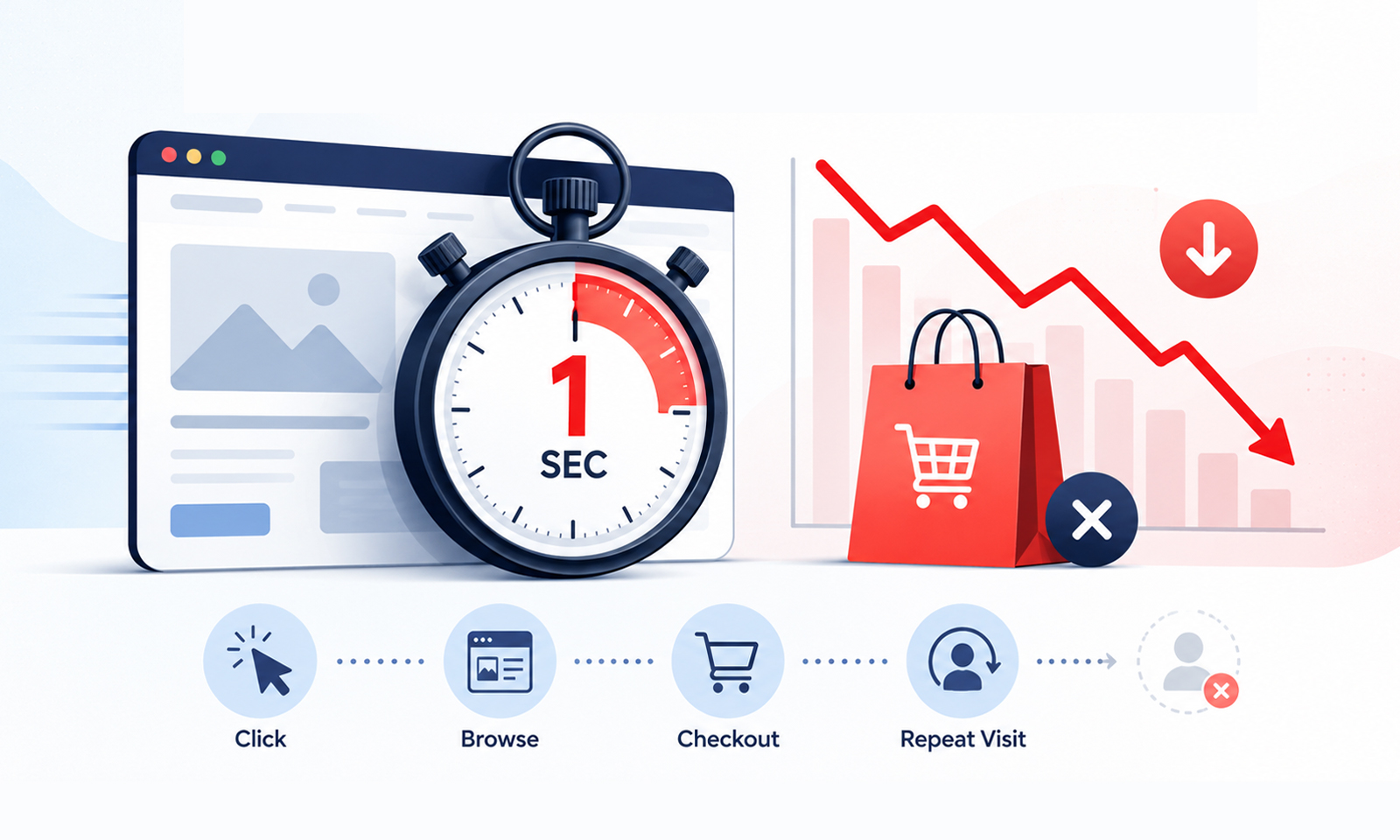
A one-second delay can affect sales long before checkout. It influences how visitors interact with your website at every stage, reducing engagement, trust, and purchase opportunities over time.
| Customer Journey Stage | Impact of a One-Second Delay |
|---|---|
| First Click | More visitors leave before engaging |
| Landing Page | Weaker first impression and trust |
| Product Browsing | Fewer products viewed and compared |
| Checkout | Higher risk of cart abandonment |
| Returning Visitors | Lower customer retention and loyalty |
Why One Extra Second Feels Much Longer to Website Visitors
The impact of a one-second delay is less about the clock and more about user expectations. Visitors rarely measure loading time consciously, they simply notice when a website feels slower than expected.
They expect websites to respond almost instantly. When a page hesitates, even briefly, it interrupts momentum and creates uncertainty before visitors see your content. Some leave immediately, while others continue browsing with less confidence.
This is one reason slow website loading affects sales beyond the checkout page. Website speed contributes to first impressions and can influence how trustworthy and professional your business feels from the very beginning.
Research from Google shows that as page load time increases from one to three seconds, the probability of a visitor bouncing rises by 32%, with the likelihood increasing further as delays grow longer. This highlights how even relatively small increases in load time can influence whether visitors stay or leave before engaging with your content.
How One Extra Second Affects Every Stage of the Customer Journey
A one-second delay doesn’t only matter at checkout. It can influence how visitors interact with your business, from their first click to becoming returning customers.
1. Discovery: Every Click Has a Cost
Whether visitors arrive through search engines, paid ads, social media, or email campaigns, every click represents an opportunity you’ve invested in. If the landing page loads slowly, some users leave before seeing your offer, reducing the return on your marketing efforts.
2. Landing Page: First Impressions Start Before Content Loads
Visitors judge your website before reading a headline or viewing a product. A slow-loading page can make your business feel less reliable, while a fast experience builds confidence from the start.
Google found that even improvements measured in fractions of a second were associated with better engagement and conversion outcomes, showing that small performance gains can make a measurable difference.
3. Product Browsing: Small Delays Break Buying Momentum
As visitors browse products, apply filters, or open images, even brief delays can interrupt the shopping experience. Instead of exploring more pages, users may view fewer products or leave before finding what they need.
For ecommerce businesses, website load time and sales are closely connected because a smoother browsing experience encourages visitors to stay engaged longer.
Even if visitors don’t leave immediately, slower category pages, filters, and image galleries reduce browsing momentum, making them less likely to discover additional products or higher-value purchases.
4. Checkout: Delays Create Doubt at the Worst Time
By the time a customer reaches checkout, they’ve already decided they want your product or service. The small UX mistakes like slow cart, delayed payment page, or unresponsive checkout can interrupt that momentum at the point where trust matters most.
Every extra second gives customers more time to reconsider their purchase, compare competitors, or abandon the process altogether. For ecommerce businesses, this is where slow website loading affects sales most directly, as even minor delays can result in incomplete transactions.
5. Returning Visitors: Speed Shapes Long-Term Loyalty
Website speed doesn’t just influence a single visit, it affects how people remember your brand.
A fast, reliable website creates a smoother experience that encourages visitors to return. On the other hand, repeated delays can leave customers with the impression that your business is difficult to use, making them less likely to revisit or recommend it.
While brand loyalty depends on many factors, a consistently fast website removes unnecessary friction and helps build positive customer experiences over time.
The Hidden Business Costs Beyond Lost Sales
When people think about how load time affects sales, they often focus only on completed purchases. In reality, the impact extends much further across your business.
A slower website can lead to:
- Lower returns from paid advertising if visitors leave before engaging.
- Fewer email sign-ups and form submissions.
- Reduced product page views and shorter browsing sessions.
- Higher bounce rates and abandoned visits.
- More customer support requests caused by slow or unresponsive pages.
- Weaker brand perception makes visitors less likely to return.
- Lower average session duration.
These effects may seem small individually, but together they reduce the overall value of every visitor who reaches your website.
Why Mobile Users Notice Delays Even More
For many businesses, mobile devices account for most website traffic. Unlike desktop users, mobile visitors often browse on variable network connections while multitasking or on the move. As a result, even a one-second delay in website experience feels more noticeable.
Research says that around 53% of mobile visitors abandon the sites that take over 3 seconds to load, with abandonment continuing to increase as pages take longer to load.
Improving website loading speed on mobile isn’t just about technical performance, it’s about meeting user expectations wherever they are.
Small Delays Add Up Over Time
A single second rarely causes a noticeable loss on its own. The bigger impact comes from repetition.
Imagine an online store receiving 50,000 monthly visitors with a 2% conversion rate. Even a small reduction in engagement caused by slower loading could mean dozens of missed orders each month. While the exact impact varies, those missed opportunities compound over time.
The exact financial impact depends on your traffic, conversion rate, and average order value, so there’s no universal dollar figure. However, studies from Portent consistently show that faster websites are associated with better engagement and stronger conversion performance, making speed an important part of long-term business growth.
Reduce Load Time Without Rebuilding Your Website
The good news is that improving website speed doesn’t always require rebuilding your website. Many performance gains come from targeted optimizations:
- Compress and properly size images.
- Remove unnecessary JavaScript and third-party scripts.
- Eliminate render-blocking CSS and JavaScript.
- Enable browser caching.
- Use a Content Delivery Network (CDN).
- Improve server response times and hosting performance.
Even a series of small optimizations can create a noticeably faster experience for visitors.
Conclusion
A one-second delay may seem insignificant, but online it can influence how visitors experience your business from the moment they click a link to the moment they decide whether to return.
As you’ve seen, how load time affects sales goes beyond conversions at checkout. It shapes first impressions, browsing behavior, customer trust, marketing ROI, and long-term loyalty. While the exact financial impact varies for every business, reducing unnecessary delays helps remove friction throughout the customer journey and gives every visitor a better chance of becoming a customer.
Improving website loading speed isn’t just a technical improvement. It’s an investment in a smoother user experience, stronger customer engagement, and better long-term business performance.
Frequently Asked Questions
Does one second really affect website sales?
How much revenue can a slow website lose?
Why do customers leave slow websites?
Does website speed affect ecommerce conversions?
Is mobile website speed more important than desktop?
What is a good website load time?
About the Author